

What types of preschool play do we distinguish?
For every child, play is much more than just a way to spend leisure time. It is a natural - and, by the way, very pleasant - form of learning about the world, developing skills, creativity, or building relationships with other people. Through play, they learn to speak, think, cooperate, solve problems, and express their emotions (sometimes including the difficult ones).
Therefore, it should come as no surprise that the topic of the importance of play in the upbringing and education of the child was (and still is) of interest to many educators. Below we will focus on what types of play in kindergarten and what classifications have been made by researchers of this issue over the years.
Types of play according to Stanislava Lipina
One of those who dealt in detail with the issue of play in the life of a child was Stanislava Lipina - a prominent Polish pedagogue. She pointed out that different types of play in the kindergarten or at home perform different functions in the development of a toddler - some develop motor skills, others develop imagination, and still others teach cooperation and social rules. She made an excellent division of children's games into several types, taking into account the purpose of play, the child's activity and the impact on the child's development. The researcher distinguished manipulative, construction, thematic, motor, as well as didactic games. Each of these plays a significant role in a child's development and should appear in the child's daily activities.
Below is a breakdown of the games according to Stanislava Lipina Along with their brief characteristics.
- Manipulative games - Appear earliest in a child's life. They involve hands and fingers. They primarily involve moving objects and exploring their properties. It is through them that the development of fine motor skills, learning the properties of objects, as well as the development of hand-eye coordination is possible. Popular types of manipulative play include putting puzzles together, stringing beads, and sifting sand.
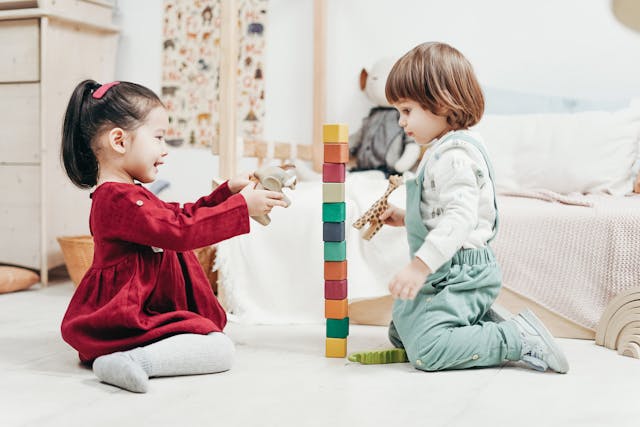
- Construction games - They can be considered an extension of manipulative. They involve creating something (works) from materials. They develop creativity and satisfy a child's need to create. Among popular construction games, he can mention, first of all, building with sand, blocks or snow, drawing or painting. It is also worth noting that another expert on the subject, Wincenty Okon, includes among construction games, for example, throwing a shadow on the wall or letting soap bubbles fly.
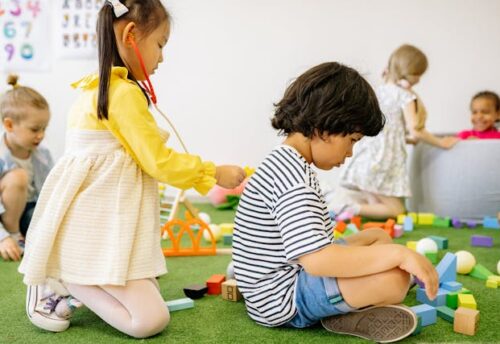
- Thematic games - They involve role-playing, imitating the behavior of others or imitating someone. They allow learning social roles, expressing emotions, developing imagination and speech. Popular themed games include, for example, playing house, store or doctor.
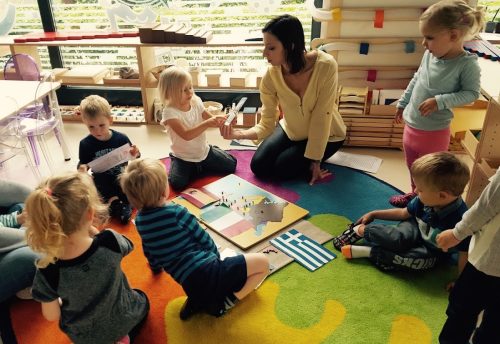
- Teaching games are a type of games that have been initiated by an adult - either a teacher or a parent. During them, a task is set before the child, which he must solve. Here it is also necessary to point out teaching games - there are certain rules and elements of competition.
- Movement games - are a variety of games related to physical activity and the need for movement in children. They allow not only the discharge of energy, but also physical development, motor coordination and learning rules and cooperation. They include, for example, rhythmic and dance games, jumping, running or playing with a ball.
Division of play according to Zofia Topinskaya
A very interesting division of games was also made by Sophia Topinskaya. She distinguished five types of it, namely thematic, construction, movement, research and didactic games.
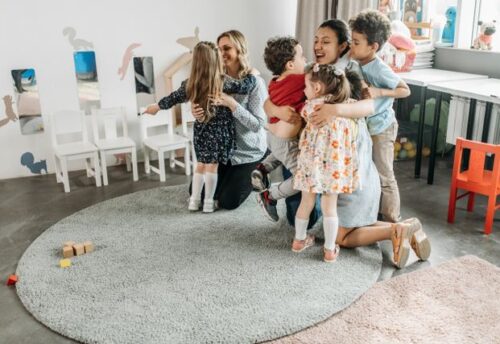
Here it is worth noting that thematic, or role-playing, games play an important role in the development of the child. They mainly allow him to imitate the adult world, learn social relations and develop imagination and speech. During these activities, children very often play in a group, and as a result, they then have to resolve conflicts, share roles, cooperate, or set rules and then follow them. In addition, let's not forget their role in developing creativity. In themed play, an ordinary object often becomes something extraordinary - a chair becomes a car, and a box becomes a cash register in a store. Emotional development is also important. Role-playing allows the child to express emotions, develops empathy, and additionally tames fears (for example, playing doctor can help tame a visit to the clinic) or allows to work through difficult emotions.
Types of play in kindergarten - guided and unguided
We can also divide preschool play into guided (planned) and unguided (spontaneous) games. The first - as the name may suggest - are planned and conducted by the teacher. Thus, they have a specific purpose: educational, didactic, developmental. In these games, the caregiver chooses their theme, then explains the rules, prepares the necessary materials, as well as watches over the course of the games (and even takes part in them). It can be said that guided games introduce elements of learning through play, and help the teacher to achieve the teaching goals. Thanks to them, preschoolers learn rules and principles, cooperation, and on top of that they develop concentration or prepare for future schooling.
Unguided play, on the other hand, is any activity undertaken by children spontaneously - without an imposed scenario and without direction from an adult. In this case, toddlers decide for themselves what they play, with whom, how long the play lasts and what the rules are. The teacher can act as an observer and guardian during this time, but does not interfere in the course of play (unless it proves necessary). Such activities teach children cooperation, independence, develop imagination, teach them to make decisions and express emotions. It is during spontaneous play that children most often role-play and learn how to relate to their peers.
Fun functions of play in kindergarten
Kindergarten games have several very important functions. Among them, point out organizational. They allow to plan the time of the child and the educator, so that the day runs on a variety of activities that make the child not only have a nice time, but also discover the world around them. Other important functions that play in the kindergarten are:
- motivating - play stimulates children to action and involvement, which is very important for their development;
- didactic - Many adults mistakenly think that play is just entertainment. It is important to remember that it is what helps shape children's skills and develops their knowledge;
- cognoscenti - Play also plays an important role when it comes to observing the wards. It allows the teacher to learn about the individual characteristics of the child, his needs, interests, strengths or possible problems;
- finally - play has an important educational function - Shapes attitudes and rules of conduct.
ItsyBitsy Preschool is a place where we are well aware of the importance of play in a child's life. We also know how important it is to create the right conditions for him to develop freely. For more information about the role of the teacher and the environment that fosters children's activities, see our blog posts.
Bibliography
L. Albanski: Play in preschool education. Jelenia Góra 2018
A. Janik: Backyard spaces and places of play. A pedagogical and cultural study. Wrocław 2021