


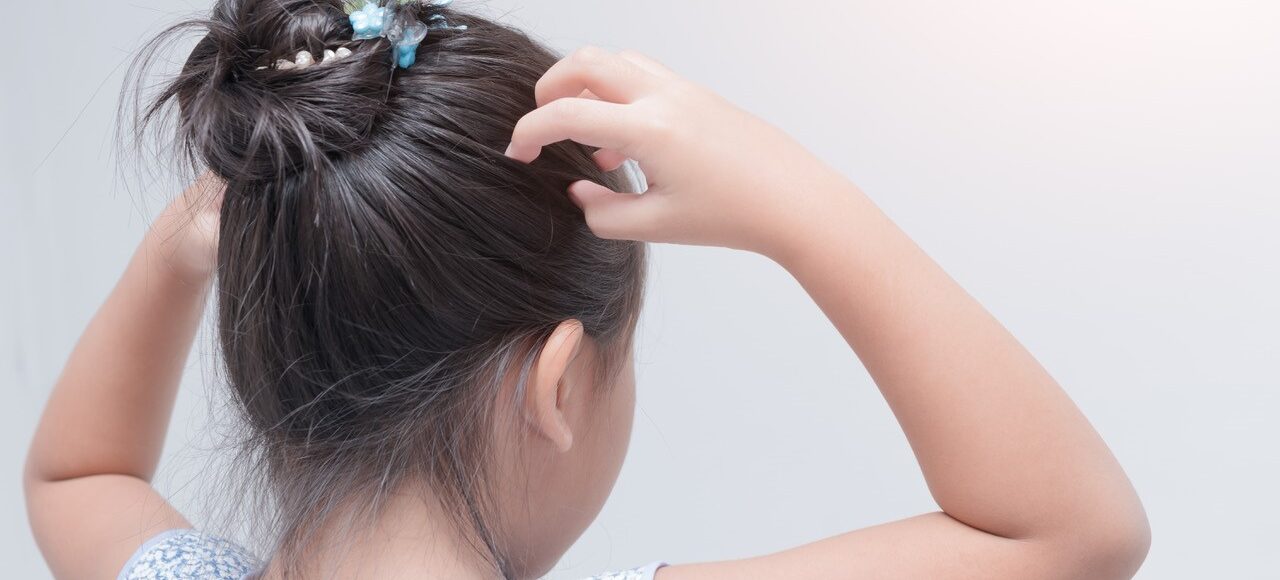
Oh no! My baby has lice!
Lice on your child's head is a problem you are likely to encounter during your preschool adventure. Although these parasites - contrary to popular belief - do not jump or fly, they are transmitted with great ease between children, who often come into contact with each other's heads while playing. However, it should be emphasized right away that this is a problem that does not affect only toddlers, but also adults who are in large concentrations of people (for example, in public transportation). Therefore, it is worth not making it a taboo subject, but knowing how to solve it effectively.
That's why knowing about it, whether a child with lice can go to kindergarten is extremely useful and will help us avoid many unpleasant situations, but above all - it will positively affect the peace of mind of parents and the safety of kids. So find out what is worth doing, lice will appear in the kindergarten, and what mistakes to necessarily avoid.
Lice in kindergarten - procedures
In our kindergarten We regularly check children's heads to catch the presence of lice at the earliest possible stage and prevent further spread of the infestation. Lice are nothing to be happy about - the head itches, the child scratches, can't focus on work or play, sleeps poorly and may have a worse mood. And then there's the parents' reaction - no one is happy to discover lice in their child. At the first time, surprise and even indignation or frustration are mixed with disgust. Precisely for this reason, it should be emphasized once again that lice in the kindergarten is a problem that we may encounter, but one that absolutely should not be ashamed of, as appropriate procedures are enough to solve it quickly and effectively.
First, let's remember that Lice has nothing to do with lack of hygiene, neglect or low material status. Lice are democratic, present in all environments, and they love your child's neat, fluffy, clean and silky hair. Therefore, do not panic. First, take care of your child's emotions: don't scare or blame him or her, don't make him or her keep a secret. The bedworm is not a stigma, it's just a problem to be solved quickly. And immediately focus on constructive action. The pharmacist will certainly be happy to point out an effective shampoo (from experience, we know that the ones that work best are those that require leaving on the head for some time, under a foil cap). Apply it according to the instructions, then comb out the baby's hair with a special, thick comb. Now all you have to do is wash the hair, dry it and you're done. On 99% it's done.
Interestingly, in Warsaw, you don't have to fight lice yourself; there are special places where nurses will take care of removing the problem for you! Quickly, in a pleasant atmosphere and very effectively. As a preventive measure, you can use special sprays and rubber bands to repel lice, but with the knowledge that a 100% guarantee of avoiding reinfestation will not give anything. That's why it's a good idea to check your child's hair regularly, tie up his long hair, and in case the parasites return, be sure to let your friends know so they can check their children for infestation during recent encounters.
Removing the odium and conspiracy of silence from lice will help all of us, instead it will harm the lice!
Can a child with lice go to kindergarten?
It is worth knowing that lice is a parasitic disease, and consequently, we will not find it in the list of infectious diseases. In the situation when we notice it in our child, we almost automatically ask ourselves this key question: Can a child with lice go to kindergarten?
It is immediately worth replacing it with another, slightly more appropriate one, namely: should a child with lice go to kindergarten? Here we can firmly answer that no. Both for safety, but also for comfort, it is definitely better for the toddler to remain at home until the treatment is completed.
As we have already mentioned, in kindergarten kids spend a lot of time playing together, touching heads, exchanging rubber bands, pins and sometimes hats. The risk of lice moving from one head to another is really high. In addition, let's also take into account that a toddler who has lice can feel great discomfort. That's why let's make sure he has a safe environment in his own home during treatment. Finally, it's also good to take care of proper prevention. To do this, you should mainly:
- Check your child's hair and scalp regularly;
- Wash linens and towels at high temperatures;
- Tie long hair in a ponytail or braid it.
In conclusion, lice are not a sign of lack of hygiene, and you should absolutely not be ashamed of the fact that it affects your child. It is good to inform the kindergarten, while the toddler should stay at home until the treatment is completed. Nowadays in pharmacies we can find very effective preparations that will quickly and effectively help us deal with the problem.