


Proximity parenting in ItsyBitsy, or the preschool as a place of closeness
What is this famous closeness parenting, until a dozen years ago more often referred to in our country as bond parenting or - for lack of a really apt translation - referred to by the English term „attachment parenting”? Could it be that famous „stress-free upbringing”, derided by older generations, who themselves raised violently believed that only a „firm hand” could „bring a child out into the world”? Psychologists associated with the NVC trend and intimacy parenting have been trying to dispel this myth for years. Stress-free parenting does not exist, and everyone's life - big or small - is full of natural stress triggers.
What is closeness parenting?
Proximity parenting is first and foremost a parenting attitude that accepts all of a child's emotions, welcomes and appreciates them. Proximity parents understand that emotions are necessary and do not try to make their child not experience emotions. Nor is it usually a priotity for them to experience them always and everywhere in a way that is tolerable or imperceptible to those around them. On the other hand, they certainly don't keep their children under a lampshade, and stressful stimuli affect their children and families as much as they do any modern person.
Importantly, however, close-minded parents realize how important it is for their children - here and now and in the future - to have a secure, trusting and honest relationship with their most important caregivers. Creating such a secure relationship with a parent is the foundation for a child's mental health, resilience and the best dowry with which to go into adulthood.
Closeness parenting also believes that there is no need to provoke difficult emotions in the child, it is not part of the parenting strategy. Hence, among the „parenting methods” in this approach, you won't find blackmail („if you don't clean up, we won't read the book”), shaming („such a big boy, and he's crying”) or scaring („this gentleman will take you away if you scream like that”).
Proximity parents respect the child's boundaries, but do not forget their own. Therefore, it is the acumen of parents who understand their role in this way, who have no problem saying „no” to a child when they feel it serves their family. Adults who know that they are a safe base for the child, are a rock and a true support, will easily refuse to buy a lollipop if they are convinced that eating it will not serve the child. They are able to take care of the difficult emotions that such a refusal may cause, and their reactions are not, for example, controlled by guilt after they have punished the child. In a close-knit family, the system of punishments and rewards does not exist. Neither between partners nor in the adult-child relationship.
Montessori preschool vs. closeness parenting
Montessori pedagogy dovetails perfectly with the philosophy of proximity parenting. The deeper one learns about Maria Montessori's thought, the more one understands how „difficult to bend” from our modern point of view her philosophy of seeing the child and human relations is. In a world ruled by training, often cruel, applied from an early age, she saw the child as a sensitive, feeling, thinking being in need of connection and support. It can be said that a truly Montessorian kindergarten is also, by definition, a closeness kindergarten. There is no place for punishment, rewards, manipulation and blackmail in our system of work. This would contradict the core values of Montessori pedagogy.
Children in Montessori institutions are encouraged to be independent and explore the world at their own pace, fostering a sense of autonomy and agency. However, it is equally important to provide them with emotional support so that they can thrive in an environment that respects their individuality and understands their age immature emotional reactions. At ItsyBitsy Montessori Preschool, we strive to ensure that every interaction between teacher and child is respectful and understanding, based on empathetic communication in the spirit of NVC.
Montessori preschool ItsyBitsy as a place of closeness
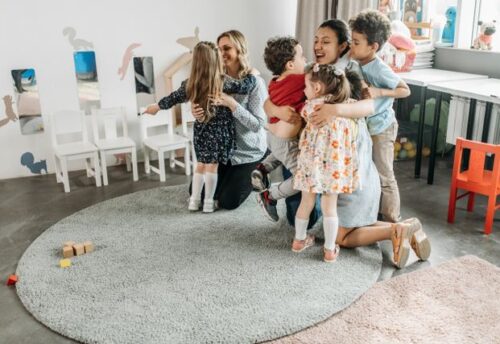
ItsyBitsy is a preschool that is based on values of closeness and appreciates the value of respectful and understanding relationships between adults and children. We are committed to making each child feel safe, accepted and understood with us. In our daily work, we apply the proximity approach, ensuring that children have space to express their emotions, and that teachers respond to their needs with empathy and understanding. We respect children's boundaries, as well as take care of our own, knowing that our behavior models children's attitudes. We always keep in mind the simple truth that children do what we do, not what we declare. We strive to create an environment where children can develop their interests and talents, while building positive relationships with adults and peers.
Individual approach to the child
At ItsyBitsy, we give each child the time and attention to understand his or her needs, talents and rate of development. In keeping with the Montessori philosophy, teachers are guides who support children on their journey to independence, while attending to their emotional needs. A child who feels understood and accepted relates to others with greater ease and develops social competence.
Emotional support and social development
Children at ItsyBitsy Preschool have many opportunities to develop social and emotional skills. Through a close-knit approach, teachers help them understand and express their emotions, which is key to building healthy relationships with their peers. We teach children how to deal with their emotions, how to name and express them, as well as how to build empathy towards others. We focus on cooperation, not competition. Mixed-age groups are very conducive to this approach.
The role of parents in a proximity preschool
Parents are an integral part of the educational process at ItsyBitsy. Our preschool supports parents by offering workshops and consultations to help them continue the philosophy of closeness at home. Collaboration with parents is key to creating a cohesive approach to parenting in which the child feels cared for both at home and in the preschool.
Proximity and independence - how does the ItsyBitsy preschool combine the two approaches?
Although proximity parenting is associated with care and concern, at ItsyBitsy we show that it is possible to harmoniously combine proximity with the development of independence. Moreover, in modern psychology, so-called overprotectiveness, or otherwise strong control, is considered a form of psychological violence. At our preschool, children are encouraged to take on challenges and explore the world on their own terms. Our approach is based on balance - we provide children with emotional support while giving them the space to be independent, explore and learn.
Summary
Closeness parenting is not just a parenting philosophy, but first and foremost a way to build a healthy, authentic relationship with your child. It's not any „new-fashioned invention,” but a return to our biological roots, an escape from the legacy of child trainers who have dominated parenting theory for too long. At ItsyBitsy, we create a space that fosters these values, combining the closeness and emotional accessibility of adults with the strengthening of independence in children.
Our preschool is a place where children feel understood, safe and ready to explore the world, which is crucial for their harmonious development. When you choose a preschool, you don't have to compromise and accept solutions and strategies that are not agreed upon in your family. You can create your village of support with people who understand parenting as you do. We invite you to contact us. Make an appointment with us and see if we are the place that can support you in the crucial years of your child's development.