


What makes an inclusive preschool different from a traditional preschool?
Today's young parents have many options when choosing a preschool and an entire educational path for their child. One increasingly popular choice is an inclusive kindergarten. In this article, we will outline how an inclusive kindergarten differs from a traditional one, the benefits of integrating neurotypical and neurodiverse children, and what to look for when choosing the right kindergarten.
What is an inclusive preschool?
An inclusive kindergarten is a facility that aims to create conditions for the joint education of neurotypical children and children with diverse learning needs, including diagnoses on the autism spectrum or ADHD. In inclusive kindergartens, the goal is the harmonious development of all children, regardless of their individual physical or emotional differences.
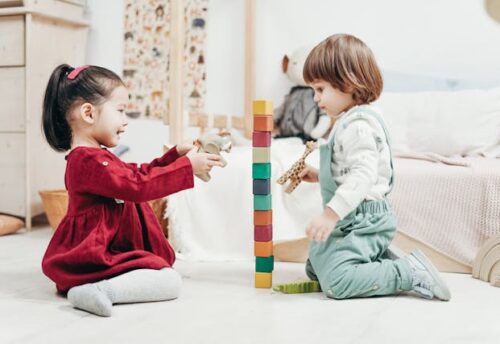
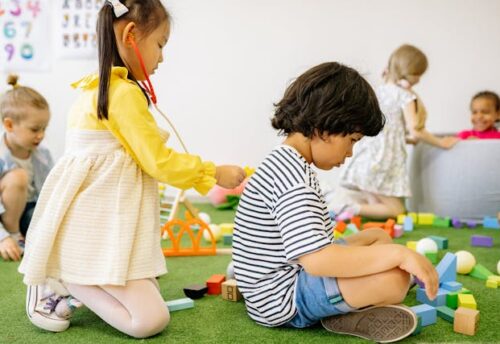
A key tenet of an inclusive kindergarten is to support diversity and promote empathy and mutual understanding among children. Integration does not just mean being physically present in the same space, but actively interacting and learning to understand each other.
Inclusive institutions employ additional specialists in psychology and special education, create individual educational and therapeutic programs for children who need them, and cooperate with local support centers for families of children with special educational needs.
Definition of traditional kindergarten
Traditional kindergarten focuses on the education of neurotypical children, using standard teaching methods and classroom organization. In such establishments, the emphasis is on learning basic social skills, motor and intellectual development. Educational programs are usually standardized and do not take into account the specific needs of children with special educational requirements.
What are the benefits of an inclusive preschool?
Benefits for children with neurodiversity
Children with diverse learning needs can count on individualized attention and support from specialists, allowing them to develop their skills at a pace that suits their needs. Inclusion also fosters self-esteem and acceptance. Children avoid stigma or labeling, meet with understanding and are important, valuable members of the community.
Benefits for neurotypical children
Neurotypical children learn empathy, tolerance and understanding of diversity, which is an invaluable lifelong experience. Working with peers of different abilities fosters the development of social and emotional skills.
Social and emotional benefits of integration
Being in a diverse environment fosters bonds between children, which leads to more balanced emotional development. Playing and learning together in a diverse group helps to foster altruistic attitudes and build a community based on mutual respect.
Differences between inclusive and traditional kindergarten
Approach to education and upbringing
Inclusive preschools focus on individualized attention to each child, taking into account their unique needs and abilities. Traditional preschools tend to use more standardized teaching methods.
Class organization and teaching methods
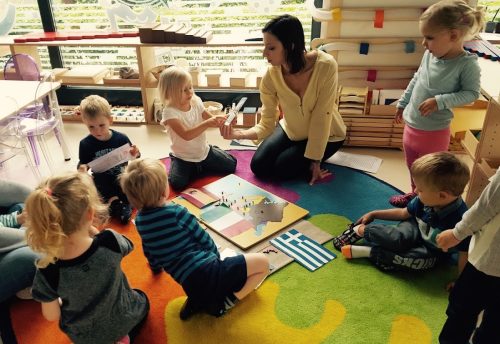
In inclusive kindergartens, activities are often tailored to the diverse needs of children, requiring more flexibility and creativity in the teachers' approach.
The role of the teacher and specialists
In inclusive kindergartens, teachers collaborate with psychologists, therapists and other specialists to provide children with optimal learning and development conditions.
Support for children with special needs
In inclusive kindergartens, children with special needs have access to individualized educational plans and therapies, which allows them to learn better and enables them to develop more fully and realize their unique potential.
Montessori in an inclusive kindergarten
The Montessori method is advisable and even salutary for neurodiverse children. In a Montessori environment, most of the barriers and problems that children with special needs encounter in conventional institutions disappear. Montessori preschools, above all, are much more sensory-friendly. They are quiet, peaceful, without an excess of visual and auditory stimuli. The better organization of space and daily schedule alone can have a therapeutic effect on children with special needs. Working with Montessori materials gives children on the autism spectrum, among others, a chance to develop their unique abilities.
A high level of mathematical, logical and cultural education gives these children the opportunity to use their often above-average abilities and aptitudes. Our experience over the years has shown that a wealth of developmental materials, empathetic and professional teachers and the absence of behavioral parenting methods (punishments and rewards) works perfectly for children on the autism spectrum or ADHD. Conventional kindergartens, in their bulk, do not create the right conditions for children on the autism spectrum. They are too noisy for them, too colorful, overloaded with adult-controlled stimuli and activities.
Trying to influence a neuroatypical child's behavior through punishments and rewards can have long-lasting and negative consequences for them. Children on the spectrum need calm, a familiar and safe routine, deep understanding, and a whole lot of empathy and warmth. For sensitive children, even observing other children undergoing behavioral methods can cause tremendous and unnecessary stress. Proximity Montessori centers are such children's salvation and hope for harmonious development.
How to choose the right kindergarten for your child?
Choosing a preschool is one of the most important decisions parents make. It is worth paying attention to the kindergarten's approach to integration, teaching methods and the availability of specialized support. Parents should also consider what values they want to shape in their child and what type of environment will be most conducive for them.
What makes an inclusive preschool different from a traditional preschool? Summary
Inclusive kindergarten is a modern approach to education that promotes the all-round development of children, both neurotypical and neurodiverse. Choosing such a kindergarten can bring many benefits, not only educationally, but also socially and emotionally. We encourage you to contact ItsyBitsy Montessori Preschool to learn more about the possibilities of inclusive education. We offer families of children with special needs not only a full therapeutic package for the child and daily support from top specialists, but also financial concessions.