

Who was Maria Montessori?
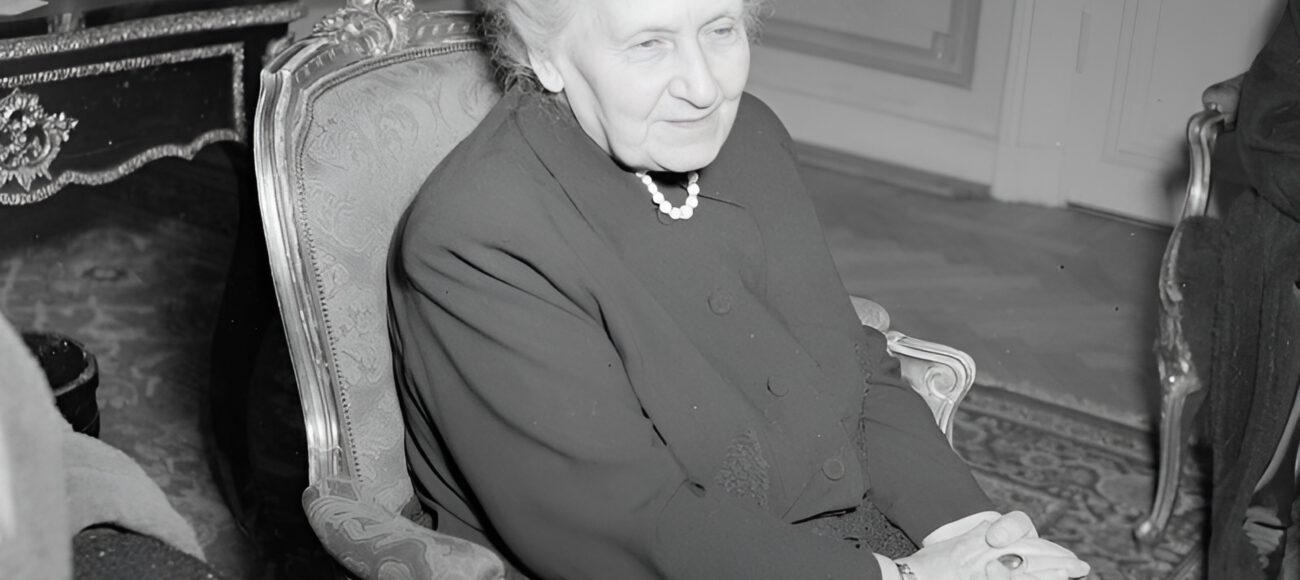
Maria Montessori, born in 1870 in Italy, was a brilliant pioneer of modern education whose innovative approach to teaching and building relationships with children revolutionized modern pedagogy. Leonardo da Vinci claimed that his greatest and most pressing skill was observation. The ability to observe carefully, reasonably, free of bias is a rare, unique gift. Everyone looks, few see, few understand. Maria Montessori had a twin intuition about her own subject when, in retrospect, she analyzed the origins of her method. She concluded that her merit was her ability to observe children. „I studied the child. I took what the child communicated to me and expressed it. That's how the method called the Montessori method came into being,” she wrote.
Maria Montessori was one of the first women with an engineering degree, as well as a medical doctor in Italy, who used her extensive training to develop educational techniques that supported children's independence, self-reliance and cognitive curiosity. Her methods are unsullied and creatively interpreted and developed around the world. They inspire teachers and parents to promote independence and a love of learning among the youngest.
Maria Montessori: Origins and Education
The early years of Maria Montessori's education
The education of young Maria Montessori is a truly epic tale of breaking new ground and conquering areas then inaccessible to women. Sixteen-year-old Maria began studying engineering at the Regio Istituto Tecnico Leonardo da Vinci in Rome. Learning science and technical subjects was something unheard of among women at the time. Maria's proficiency in these fields, as well as her boldness and confidence in her own competence, would in the future allow her to create materials for teaching mathematics that were unique and brilliant in their simplicity. She was not a layman, she knew what she wanted to teach children and how to achieve it.
When she graduated from college, her father urged her to pursue a career in education. The position of teacher was, in those days, one of the few socially acceptable roles for ambitious, independent women. One could say that the father had a prophetic vision: his daughter was destined to have a dizzying career as an educator in the future. But not yet, now the young Maria wanted to become a doctor. Not even a professor could stand in her way. The one who rejected her candidacy as a future medical student at the school he headed. „I know that I will become a doctor,” - Maria commented on his decision not to accept her as a student.
Medical school
When she finally made it to university, Maria Montessori's medical studies were fraught with challenges. Not only because of the difficulties involved in learning a difficult field, but because of the prejudices she faced as a woman. While studying at the University of Rome, Montessori often worked alone during dissections. Coeducational classes in the dissecting room were unthinkable for the instructors. She was the last to enter lectures when all the men had taken their seats on the lecture hall benches. The back benches were left for her. Her dedication and determination, as well as her resilience to humiliation, earned her a medical degree in July 1896. Maria Montessori became one of the first female doctors of medicine in Italy.
First professional successes
These challenges did not dampen her ambitions. As early as September of the same year, Maria Montessori represented Italy at the International Congress of Women in Berlin. There she argued that women should have the right to equal pay with men. It's the turn of the century, women don't have the right to vote, and Maria Montessori is fighting the wage gap! It is impossible to deny her courage, visionary and independent thinking. She will want the same for her later pupils. An obedient, quiet, obeying adult orders child will never be her ideal. Following her example, neither is the ideal in our Montessorian institutions. Montessori underscored her commitment to the community in response to a question from a reporter who was curious about how patients reacted to a female doctor. She replied: „... people intuitively know when someone really cares about them... It is only the upper classes who have prejudices against women who want to be useful in social life.”.
These early life experiences had a significant impact on her later career and the formation of her pedagogical beliefs. These beliefs were to revolutionize education around the world in the future.
Development of the Montessori method
The beginnings of Maria Montessori's career
A year later, Maria Montessori, seeking to broaden her scientific horizons, joined a research program at the psychiatric clinic of the University of Rome. It was there, working with Giuseppe Montesano, with whom she was also linked by an affair and soon a son, that she began to take a deeper interest in pedagogy. While working at the Montessori clinic, she often visited Rome's shelters for children with deficits, seeking patients for research and treatment. During one such visit, the children's caretaker expressed disgust, saying that the children were picking crumbs off the floor after meals and playing with them. For Maria, this was an important observation and she saw it as something completely different from the educator. Through her observation skills, she realized that in the empty, unfurnished rooms, the children were desperate and desperately looking for anything to stimulate their senses and provide activity for their hands. She concluded that the lack of adequate sensory stimulation and hands-on activities contributes to exacerbating their condition. It is even possible that in some cases it is their main cause.
Studies on pedagogy
Inspired by this experience, Montessori began to study extensively the literature on children with learning disabilities. She was particularly interested in the groundbreaking works of two Frenchmen from the early 19th century. These were Jean-Marc Itard, known for his work with the „wild boy of Aveyron,” and his student Edouard Séguin.
Lecture in Turin
Montessori's work with children in day care centers has gained great recognition over time. In a speech at the National Medical Congress in Turin, she advocated the controversial theory that the lack of proper care for mentally and emotionally disturbed children is the cause of their later criminal tendencies.
The origins of Casa dei Bambini
Years passed, and Maria became increasingly fascinated by the development of children. It was a period of rapid urban development in Rome. Some construction companies went bankrupt, leaving behind unfinished projects that quickly attracted tenants. One such estate, located in the San Lorenzo district, was saved by a group of wealthy bankers. They carried out its renovation, creating low-cost housing for poor working families. Parents worked all day, and younger children, free from compulsory schooling, wreaked havoc in the newly completed buildings. The administrators turned to Maria Montessori, already well-known in her field, to suggest ways to occupy the children during the day to prevent further destruction.
Opening of the first Children's Home
Montessori used this opportunity to work with neurotypical children. Using the educational materials she had created during her previous teaching work, she founded her first „Casa dei Bambini,” or „Children's House.” It was opened on January 6, 1907. A modest opening ceremony was held, but few people expected the success of the project. After all, what could one expect from the filthy rovers of a poor neighborhood? What can children neglected from birth achieve? It will be a success if they start their criminal or at least vanity careers later than expected. Montessori felt differently. She said: „I had a strange premonition that made me announce with certainty that here was opening an enterprise that the whole world would one day talk about.”.
Experiments and the success of the Montessori method
At her facility, Maria introduced a wide variety of activities and materials into the children's environment. She verified her assumptions, observed, and drew conclusions. Over time, she retained only those materials and activities that sincerely engaged her pupils. Montessori realized that children placed in a carefully designed and prepared environment had the power to learn beyond all expectations. In 1914 she wrote: „I have not invented a method of education, I have simply given some young children a chance at life.”.
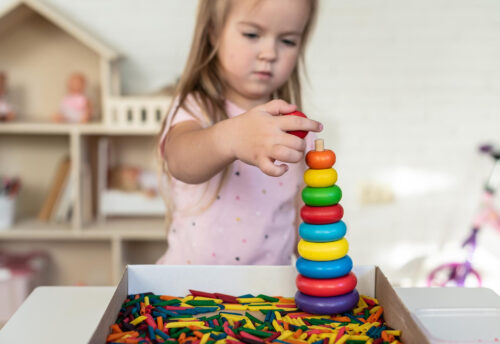
The Montessori method, based on independence, observation and a prepared environment, allowed the children to develop at their own pace, according to their individual needs and interests. The children at Casa dei Bambini made unprecedented progress. By the age of 5, most could read and write, were mathematically developed, and were full of life and fulfilled.
The spread of the Montessori method
News of the unusual educator and even more unusual children spread quickly. Visitors interested in Maria's methods began arriving at her institution. By 1908 there were already four Casa dei Bambini in Rome and one in Milan. Soon pedagogy in the style of the Italian genius permeated preschool education in the Italian-speaking part of Switzerland. To this day, the country's mainstream kindergartens are very much steeped in the Montessori philosophy, which is another thing that - along with gold, watches and chocolate - can be envied by the Swiss.
Maria Montessori and her educational philosophy
A key element of the Montessori philosophy is the belief that children learn best by actively experiencing the world. All this, while maintaining freedom of choice and dignity. Teachers in the Montessori methodology act as observers and guides. They help children explore knowledge in a structured way, but one that allows freedom of discovery. Montessori emphasized that a teacher must not subjugate his students. On the contrary, his goal is to gradually make the students independent of each other. In a world dominated by the Prussian model of education and the cult of obedience, this was an iconoclastic statement, revolutionary and as refreshing as a spring breeze.
Montessori's impact on education around the world
The year 1909 became a turning point in Maria Montessori's career. It was then that she conducted the first training course of her method for about 100 students. Notes from this period became the basis for her first book. An English translation entitled „The Montessori Method” was published in the United States in 1912. It quickly reached number two on the non-fiction bestseller list. The book was translated into 20 different languages shortly after its debut. It had a major impact on education in countries that were willing to listen and open to news. The work cemented Maria Montessori's status as one of the most influential figures in modern pedagogy. Her philosophy, which prioritized children's independent discovery of the world, inspired teachers and educators around the world to rethink and reform their working methods. The Montessori method not only transformed the outlook on child rearing and education. It also laid a solid foundation for further research and development of pedagogy around the world.
Montessori today: Legacy and contemporary applications
The Montessori method is not only a living legacy of its founder, but also an ever-evolving practice. In schools such as Montessori ItsyBitsy Preschool, the method is adapted to modern conditions, enabling children to develop key skills and competencies needed in the 21st century. It's no coincidence that kindergartens and schools in the Montessori stream have a very strong presence in Silicon Valley, among the children of lieder and high-tech innovators. Parents who want their children to easily find their way in the modern world do not plant them in front of tablets and interactive whiteboards, but put them on manipulating physical objects in real space. Preparing snacks, cleaning up, taking care of their workspace, choosing an activity on their own, bringing their work to completion, evaluating the results of their work on their own. First the concrete, then the abstract. From the particular to the general, through the work of the hands to the advanced operations of the mind. This is how you build a solid foundation for mathematical and logical thinking. This is how we work at ItsyBitsy Montessori Preschool.
What do people as disparate as Google creators Larry Page and Sergey Brin, Amazon founder Jeff Bezos, The Washington Post publisher Katherine Graham and “The Sims” game designer Will Wright have in common? Yes, they are famous members of the so-called Montessori Mafia, a group of people who had the privilege of enjoying the benefits of a Montessori education as children. Other members of the club include Facebook creator Mark Zuckerberg, Wikipedia founder Jimmy Wales, Microsoft founder Bill Gates, and culinary author Julia Child, among others. The list is much longer: George Clooney, Alan Rickman, Hugh Grant, Beyonce, Gabriel Garcia Marquez ... Each different, each unique. It still doesn't end there: Jackie Kennedy, President Woodrow Wilson, Prince William, Prince Harry and William's children. But above all, Montessori graduates are thousands of people who lead fulfilled lives, not necessarily in the limelight, and their childhood was free from the many bane of conventional education.
Summary
Maria Montessori left a lasting legacy. It is continued by numerous schools and kindergartens around the world, including Warsaw's ItsyBitsy Montessori Kindergarten. We encourage parents to visit our facility. See for yourself how the Montessori method is put into practice today, in the 21st century, in the heart of a European metropolitan area. Nothing can replace the personal experience of meeting the Montessori community, asking questions directly, getting honest answers. We don't sugarcoat things, and we always promise a little less than we can give - this is also one of the unwritten Montessori rules.
We are open for introductory meetings, willing to share our experiences, our doors are glass and our windows are huge. Come and see if our philosophy of being with children and early childhood education is what your family is looking for.