

Small motor skills - what is covered by this term?
Small motor skills is the term used to describe the ability for precise hand and finger movements and eye-hand coordination. Its development plays a key role in the first years of a child's life, as it forms the basis for daily activities such as dressing, eating, playing and writing. In the Montessori philosophy, the development of fine motor skills is particularly important. Efficient hands enable children to learn skills that contribute to their independence and healthy self-esteem. In „The Secret of Childhood,” Dr. Montessori wrote: „The hand is that delicate organ with a complex structure that allows intelligence not only to manifest itself, but also to enter into special relationships with the environment.” In this article, we will discuss what the fine motor is, how it is viewed in the Montessori method, and how to support its development at home and in the nursery.
What is fine motor skills?
„The development of hand skills is related in man to the development of intelligence - if you look at history - also to the development of culture. One could say that if man thinks, he thinks with his hand and acts with his hand. Almost immediately after man appeared on earth, there were traces of the work of his hands,” Maria Montessori wrote. Dr. Montessori was aware of the importance of a child's motor development, including its later phase, the small motor skills. Recall: this is the ability to make precise movements using small muscle groups, especially in the hands and fingers. It is the ability to grasp, manipulate objects, write, draw, or perform complex tasks that require high precision (crocheting, cutting, etc.). The development of fine motor skills is crucial to a child's independence, enabling him to develop skills that will affect his daily functioning and learning new tasks.
The importance of fine motor skills in the Montessori philosophy
Maria Montessori attached great importance to the development of fine motor skills as an essential element in a child's education. In her teaching method, children are encouraged to engage in activities that develop their manual skills and coordination, while it is important that they do so in an engaging, meaningful and enjoyable way. Montessori believed that children learn best through hands-on activities that are tailored to their needs and developmental stages. Accordingly, Montessori's materials are designed to support children in developing precise movements and improving their manipulative skills.
Practical life exercises vs. small motor skills
In the Montessori philosophy, hands-on living exercises play a fundamental role in supporting the development of fine motor skills. These activities are planned so that children can practice everyday activities that require the use of their hands and fingers, such as pouring water, fastening buttons or tying shoelaces. These activities help children improve their manual skills while teaching them independence and responsibility. Examples of activities include:
- Pouring water from a pitcher into a glass
- Sifting rice or beans
- Fastening and unfastening buttons, locks, snaps
- Tying laces and tying bows
Montessori aids to promote fine motor development
In the Montessori method, there are a number of specialized materials that promote the development of small motor skills. These include:
- Sliding puzzles - help children learn how to match pieces and develop fine motor skills.
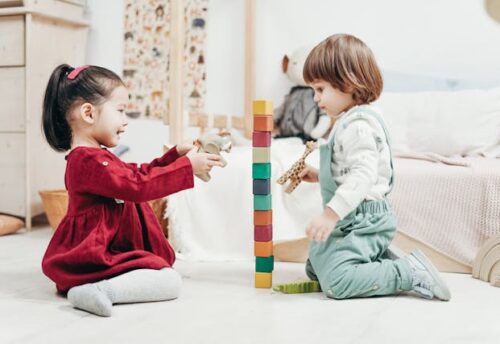
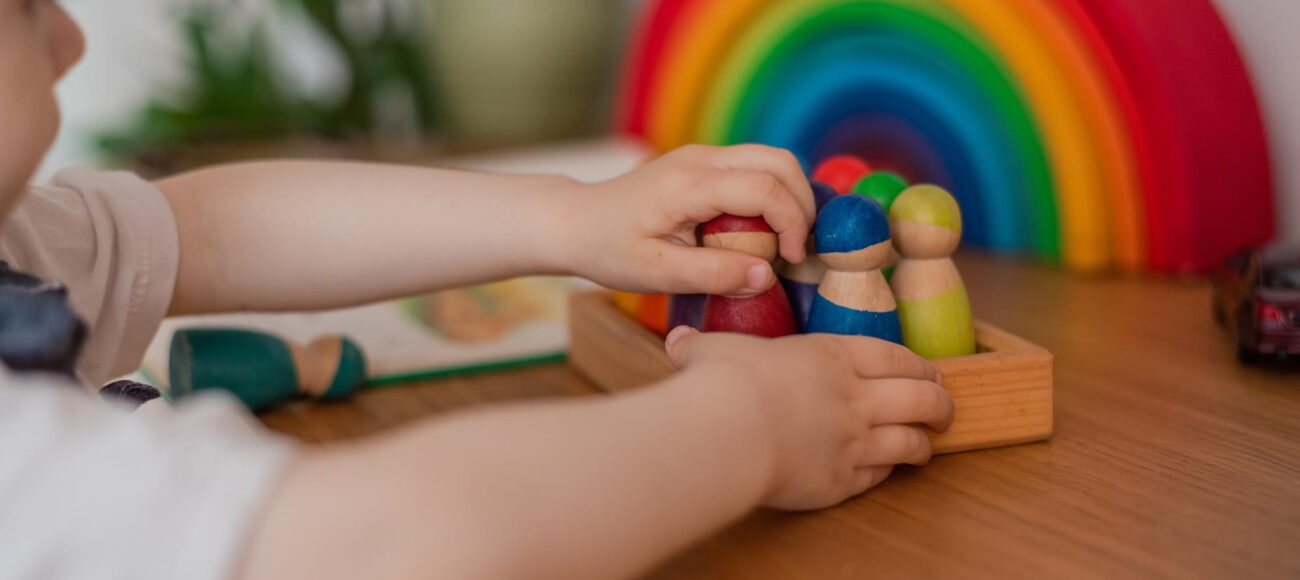
- Wooden manipulative aids - such as shape sorters, clothes frames or boxes with holes.
- Treasure baskets - containing everyday objects that children can explore and manipulate.
- Tools for artwork - such as scissors, brushes, or crayons.
How to support the development of small motor skills at home?
Parents can support their child's fine motor development by creating the right environment at home and involving the child in daily activities. Here are some tips:
- Create space for play - provide access to materials and toys that require manipulation of hands and fingers.
- Involve your child in daily activities - let your child help prepare meals, clean up or set the table.
- Use materials made of natural materials - wood, fabric and metal are safe and stimulating for small hands.
- Introduce play with water and sand - pouring, pouring or mixing helps develop hand-eye coordination.
Benefits of developing small motor skills
The development of fine motor skills not only supports practical abilities, but also has a broad impact on other aspects of a child's development, including:
- Self-reliance - the ability to do things independently increases a child's self-confidence.
- Concentration - tasks that require precision help children develop the ability to focus on one activity.
- Language development - manipulating objects and exploring the environment supports the development of vocabulary and brain structures responsible for language.
- Creativity - manual games cheer up a child's imagination and creative thinking.
Montessori exercises for children of all ages
Age-appropriate exercises for the child may include:
- 0-3 months: Play with simple contrast materials such as black and white cards, observation toys, and mobile with push balls.
- 3-6 months: Playing with rattles, wooden balls, simple mobiles.
- 6-9 months: Using shape sorters, first puzzles, simple musical instruments.
- 9-12 months: Push and pull toys, developing the ability to put objects in and take them out of containers, treasure baskets, sorters, first Montessori pomoe for toddlers.
The role of the parent and teacher in the development of small motor skills
Adults play a key role in the development of a child's fine motor skills, creating a favorable environment and supporting the child's activities. It is worthwhile to provide time and space for the child to explore, to observe them to notice their needs, but not to interfere too often. Children should be free to explore their surroundings to develop their skills independently.
Summary
Small motor skills are extremely important for a child's development. Its fostering in the Montessori spirit contributes to the acquisition of skills that lay the foundation for independence, responsibility for the environment and intelligence. Through appropriate exercises, Montessori aids and the involvement of parents and teachers, children can develop holistically, becoming ready for new challenges and discoveries. If you feel you need support in your child's early education, please contact us. It may be time for a little more formal Montessori activities and to relieve you of the burden of educational tasks. Small motor skills, though not exclusively, are our specialty!